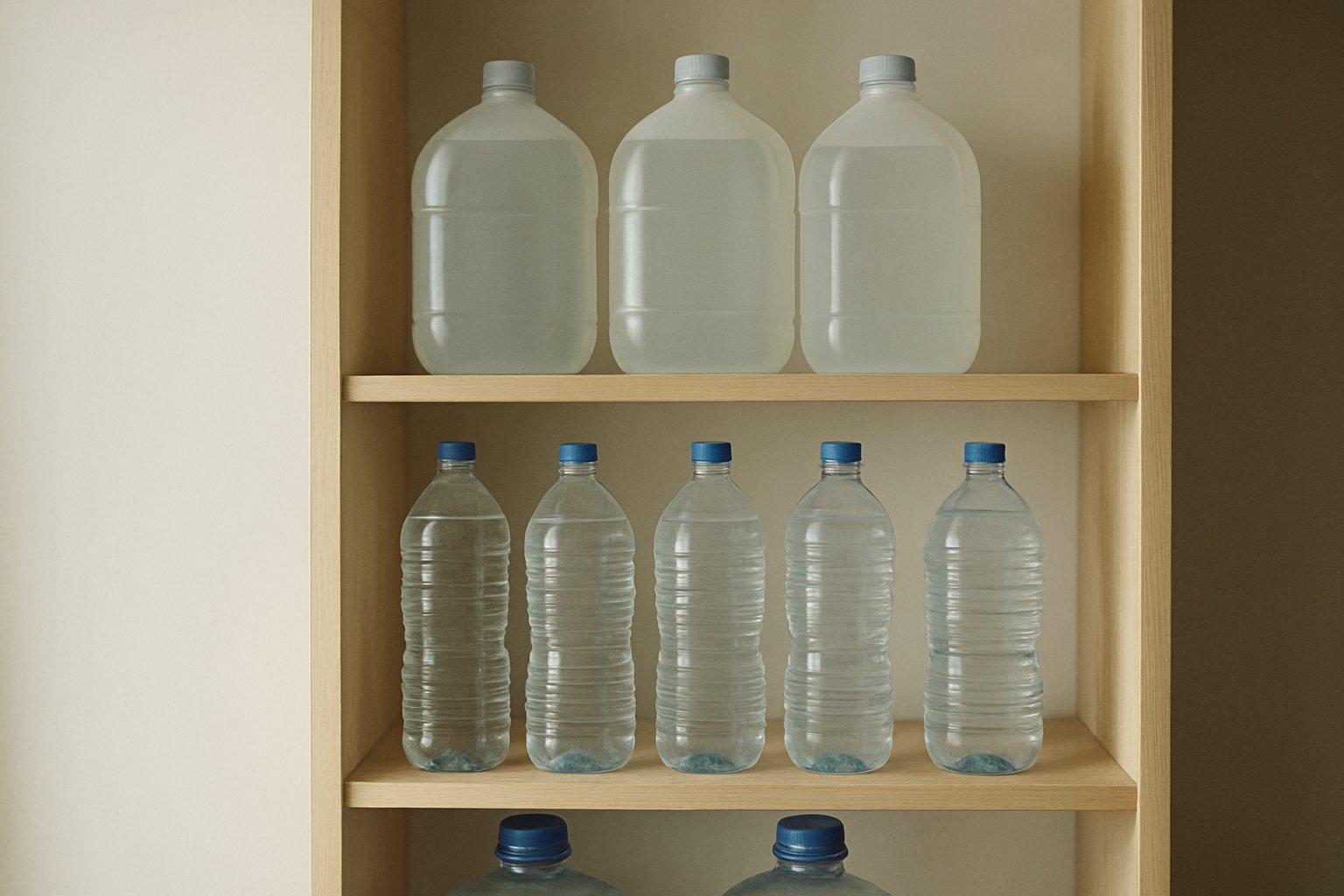
Water: Storage and Purification
How much you need, how to store it so it doesn't spoil, and 4 methods to make water potable when the tap doesn't work.
How Much Water You Need
The standard reference is 3 liters per person per day: 2 for drinking and 1 for basic hygiene and cooking. For a 72-hour kit for a family of 4: 36 liters. Add more if there are babies (formula), pregnant women, elderly people, or hot weather. In summer or with physical activity, go up to 4-5 liters per person per day.
| People at home | 72 hours | 1 week | 2 weeks |
|---|---|---|---|
| 1 | 9 L | 21 L | 42 L |
| 2 | 18 L | 42 L | 84 L |
| 3 | 27 L | 63 L | 126 L |
| 4 | 36 L | 84 L | 168 L |
How to Store It So It Doesn't Spoil
- Use unopened bottled water jugs (expiration date printed: usually 1-2 years).
- Or reuse PET soda bottles: fill with tap water, seal tightly, label with the date.
- Store in a cool, dark, dry place: away from sunlight and chemicals.
- Don't use milk or juice containers: organic residue ferments.
- Keep water off the floor (pallet or shelf) and check for leaks.
- Replace stored water every 6-12 months: use it for watering or cleaning and refill.
Purification: 4 Methods When the Tap Doesn't Work
Order of reliability for making questionable water potable (from rivers, rain, pools, tanks):
- Boiling (the king method) — 1 minute at a rolling boil (3 if chemical contamination is suspected). Kills bacteria, viruses, and parasites. Let it cool in a clean, covered container.
- Purification tablets — dichloro-s-triazinetrione (aquatabs) or iodine. Follow package instructions; iodine is not suitable for pregnant women or prolonged use.
- Portable filters — membrane filters (0.1-0.2 microns) like LifeStraw or Sawyer: filter bacteria and parasites, not viruses. Ideal for the backpack.
- Additive-free bleach — 2 drops per liter of clear water (4 if cloudy), shake, wait 30 minutes. It must be food-grade bleach (4-5% active chlorine), without perfume or thickeners.
Water Sources at Home You Hadn't Considered
- Water heater tank (up to 100+ L of already treated water). Close the inlet before draining it.
- Toilet tank (non-potable water, fine for cleaning and flushing).
- Pipes: close the main valve and open the highest faucet so water from the pipes drains into containers.
- Ice from the fridge: melt it, it's potable water.
- Water from canned fruit (the syrup can be drunk in extreme cases).
In case of an official water contamination warning, DO NOT use it even for brushing your teeth until authorities confirm it is safe.