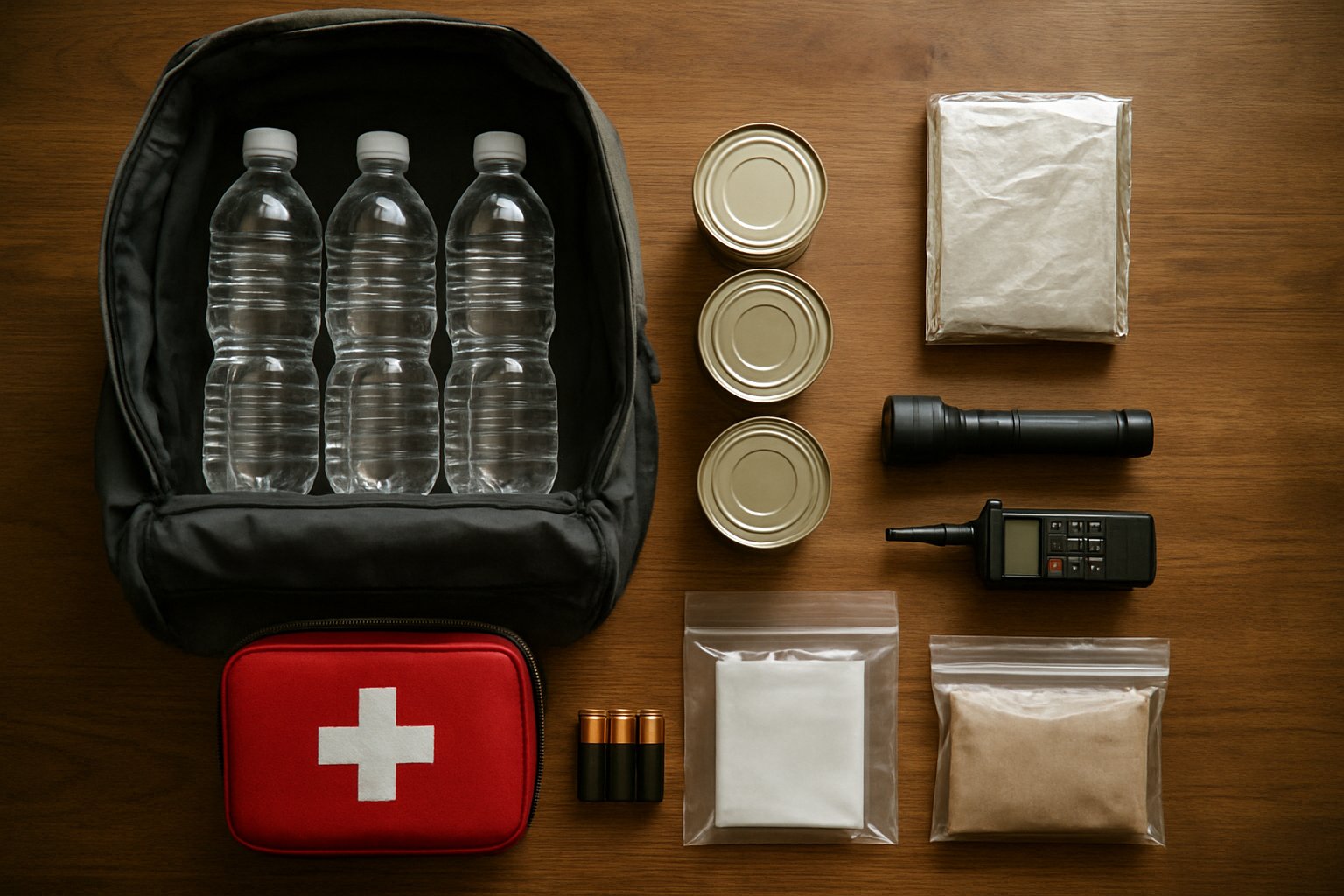
72-Hour Emergency Kit
The backpack that gets you out of the house in 7 minutes. Complete list, weights, and tips to put it together without overspending.
The 72-Hour Rule
Civil protection authorities around the world use the same reference: in a major disaster, help can take between 48 and 72 hours to reach your area. During that time, you and your family depend on what you already have prepared at home. The goal of the 72-hour kit is to cover water, food, warmth, communication, and first aid for three days without relying on anything external.
You don't need a bunker or to spend thousands of euros. With a backpack, a plastic box, and a few well-thought-out purchases, most families can put together their kit for less than €80, using things they already have at home.
The 7 Kit Categories
Organize the kit by category so you don't forget anything and can find everything in the dark:
- Water — 3 liters per person per day, minimum 72 hours. For a family of 4: 36 liters.
- Food — canned goods, bars, nuts: anything that lasts without a fridge or fire.
- Warmth and light — emergency blanket, warm clothing, flashlight, candles, lighter.
- Communication — battery-powered AM/FM radio, whistle, charged portable charger.
- Health — first aid kit and personal medication for 7 days.
- Documents — copies of ID, policies, deeds, contacts.
- Hygiene — hand sanitizer, toilet paper, garbage bags, masks.
Complete Kit Checklist
Print this list and check items off as you gather the supplies:
- Bottled water: 3 L per person per day (72 h min.)
- Non-perishable food: canned goods, bars, nuts
- Manual can opener
- LED flashlight and spare batteries
- Battery-powered or crank AM/FM radio
- Charged power bank and cable
- First aid kit: bandages, gauze, tape, antiseptic
- Personal medication (7 days)
- Emergency blanket
- Warm clothing, socks, and sturdy footwear
- Whistle
- Lighter or matches + candles
- Multi-tool knife
- Rope 5-10 m and duct tape
- Document copies: ID, passport, insurance policies
- Cash (small bills)
- Hygiene items: hand sanitizer, toilet paper, bags
- Mobile phone and car charger
- Extra water and bars for the car
- Written family plan with meeting point
The Backpack Ready in 7 Minutes
The evacuation backpack should always be in the same place, within reach (hallway or entrance), with documents on top. What goes out with you in a real evacuation:
- Backpack with the 7 kit categories (light version)
- Folder with vital documents
- Water bottle per person
- Emergency blanket and rain poncho
- Whistle and flashlight in the outer pocket
- Charged portable charger
- 7-day medication in a separate bag
- Contact list and numbers written on paper
Maintenance: A Forgotten Kit Is Useless
- Food rotation: whatever expires first gets eaten first (FIFO rule).
- Batteries: store them outside devices to prevent corrosion.
- Water: check that containers are sealed; replace every 6-12 months.
- Medication: check expiration dates every 6 months.
- Documents: update copies after any major change (new ID, move, new policy).
- Clothing: adapt the kit to the season (winter blanket, hat and sunscreen in summer).