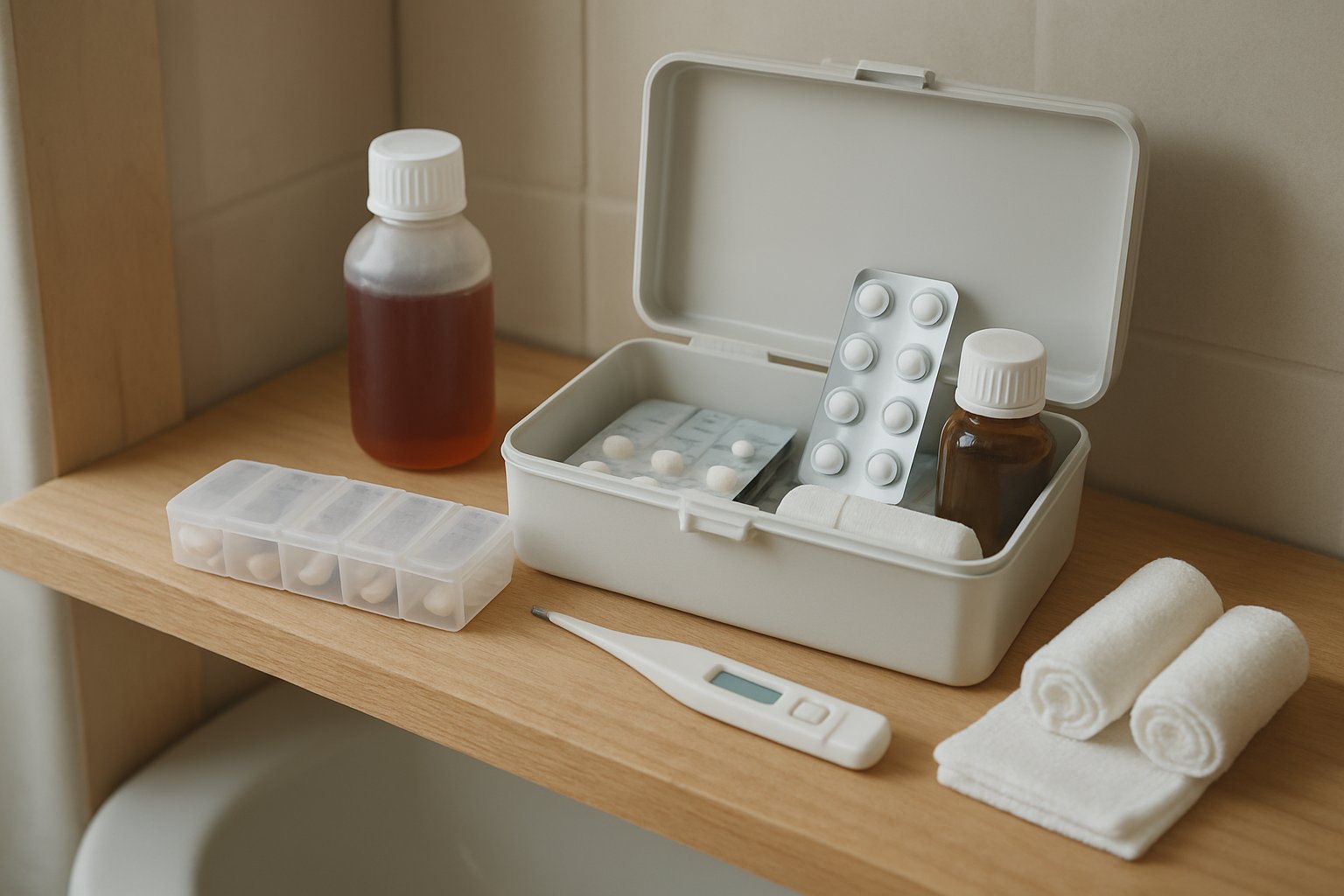
Home and backpack first aid kit
Complete list of supplies, personal medication, and expiry dates. The first aid kit that fits in a lunchbox.
Two first aid kits, two levels
The home first aid kit covers the house (large box); the backpack kit covers 72 hours away from home (lunchbox or small bag). Both are checked together, twice a year.
Home first aid kit (house)
- Antiseptic (chlorhexidine or povidone-iodine)
- Sterile gauze (various sizes) and bandages
- Adhesive dressings and band-aids
- Cloth tape
- Blunt-tip scissors and tweezers
- Nitrile gloves (several pairs)
- Digital thermometer
- Pain reliever/fever reducer (paracetamol, ibuprofen)
- Antihistamine (hives, insect bites)
- Saline solution in single-dose vials
- Oral rehydration solution (sachets)
- Emergency blanket
- Small flashlight
- FFP2 masks and hand sanitizer
- Emergency phone numbers list
Backpack first aid kit (72 h)
- Mini version: gauze, band-aids, tape, antiseptic in single-dose vials, pain reliever, antihistamine.
- Personal medication for 7 days in a separate bag (with prescription if needed).
- Gloves and masks.
- Emergency blankets (2).
- Everything in a waterproof bag: a lunchbox or a sealable toiletry bag.
Personal medication: what you can't improvise
- Each member with chronic medication: 7-day reserve in the kit, renewed every 6 months.
- Write on the bag: medication name, dose, and who it belongs to.
- If medication needs refrigeration (insulin, some vaccines): plan for a portable cooler with ice and evacuation priority.
- Severe allergies: carry the antidote (auto-injectable epinephrine) in the backpack ALWAYS, not in the first aid kit.
- Glasses: spare frames or prescription in the document folder.
Review and expiry dates
- Check expiry dates every 6 months (with the daylight saving time change).
- Replace what you use, immediately: a half-stocked kit is useless.
- Write the purchase date on non-expiring items (gauze, bandages) and rotate what does expire.
- Keep the first aid kit out of the bathroom (humidity) and away from children, but accessible.
No guide replaces the advice of a healthcare professional: in case of doubt or serious symptoms, call 112 or your health center.