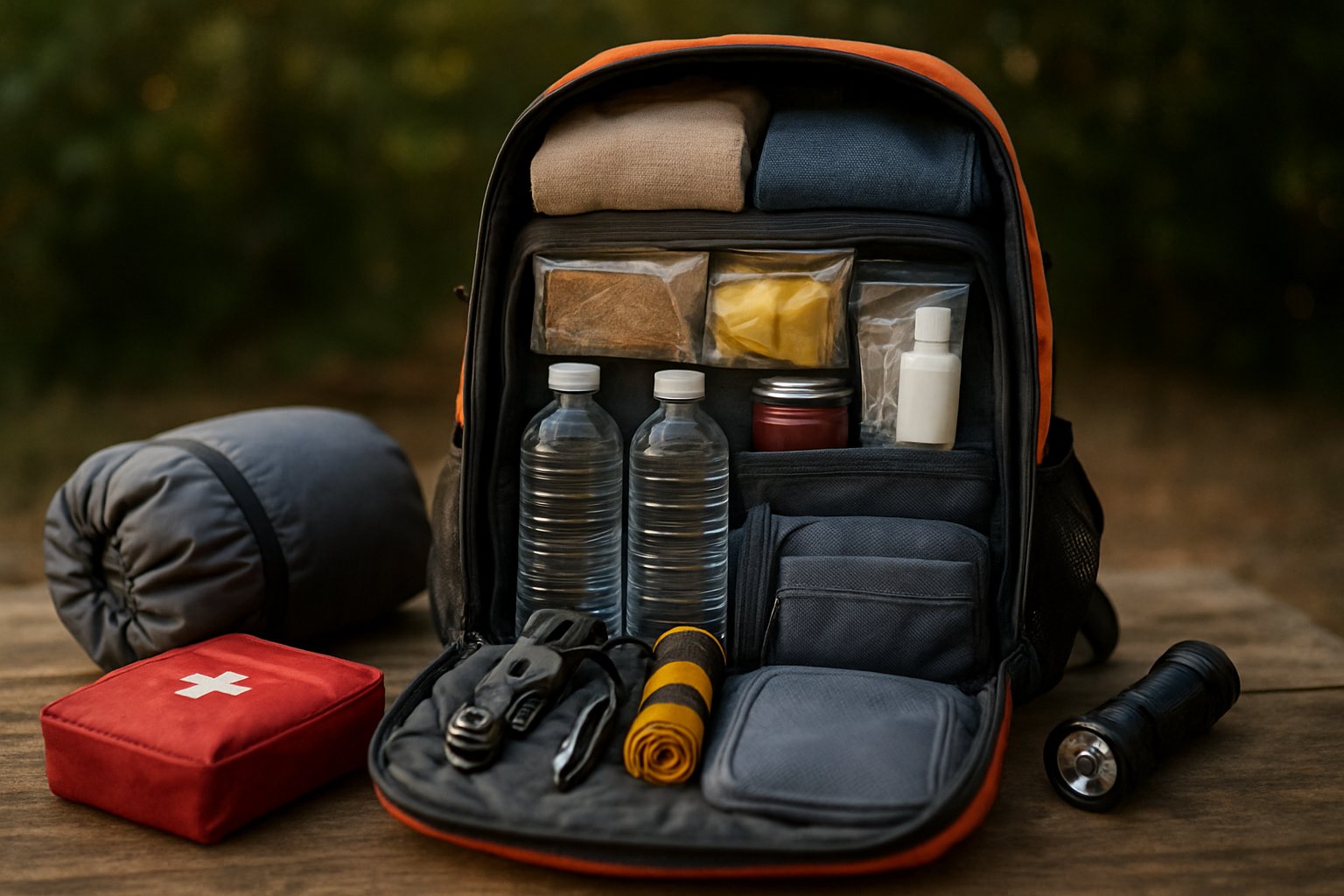
48-hour evacuation backpack
The lightweight version for real evacuations: the essentials for two days away from home.
The philosophy: light, ready, by the door
When it's time to evacuate, the backpack weighs, not the house. An evacuation backpack should let you live 48 hours away with what you have on and without effort. Target weight: 5-8 kg for an adult, 2-3 kg for a child. If you can't carry it comfortably for 10 minutes, it's too heavy.
The base backpack (adult)
- 2 water bottles (1.5 L each) and water purification tablets
- Light food: energy bars, nuts, small canned food
- Change of clothes: t-shirt, socks, underwear
- Raincoat and emergency blanket
- Hygiene: gel, toothbrush, toilet paper, wipes
- Mini first aid kit and 48 h medication
- Flashlight + batteries, lighter, whistle, pocket knife
- Charged power bank and cable
- Small battery-powered radio (if you have one)
- Document folder + cash
- Phone, glasses, keys
- Written contact list
Children: they should be able to carry theirs
- Small backpack with their name: water, energy bar, small toy, notebook and pencil, blanket.
- Put a card with their name, parents' phone number, and allergies (in the pocket and sewn into the backpack).
- Extra warm clothing and a full change of clothes.
- Diapers, wipes, and formula if applicable.
Pets
- Carrier or extra leash.
- 2 days of food in an airtight bag and water.
- Copy of vaccination records and a photo (in case you get separated).
- If they tell you to evacuate, DO NOT leave your pet: shelters usually accept animals in cages.
The car backpack
The car is your plan B when you're not at home: keep a small backpack in the trunk, sealed in a bag:
- 3 L of water and non-perishable food
- Emergency blankets (2) and raincoat
- Flashlight, lighter, knife
- USB charger for the car cigarette lighter
- Mini first aid kit
- Paper map of the area
- Sand or non-slip blankets (winter)
Evacuation rules
- Leave when authorities say so: don't wait until the last minute, but don't rush either.
- Route: two planned options (avoid bridges and coastal roads during storms).
- Communicate with your contact outside the area: where you're going, with whom, when you'll arrive.
- When leaving: turn off gas, water, and electricity; lock the door and leave a note on it.
- Never cross moving water, on foot or by car: 15 cm of water can already sweep you away; 30 cm, a car.
Do a "test evacuation" once a year: put on the backpack, time your exit from home and the walk to the meeting point. Adjust the weight and what's left over.