Basic First Aid
CPR, choking, bleeding, burns, and fractures: the minimum every family should know.
The priority is always: safety and 112
Before touching anyone: secure the scene (don't become a second victim). Call or have someone call 112 and follow their instructions. These steps are not a substitute for a course: take one, but know the basics.
Unconscious person who is breathing
- Check for response: shout loudly, gently shake the shoulders.
- Open the airway: tilt the head back, lift the chin.
- Look, listen, and feel for breathing for 10 seconds.
- If breathing: place them on their side (recovery position), monitor breathing, and call 112.
- If NOT breathing or breathing abnormally (gasping): start CPR.
CPR (cardiopulmonary resuscitation)
- Lay the person on a hard surface, kneel beside them.
- Place the heel of one hand on the center of the chest, the other hand on top, fingers interlocked, arms straight.
- Compress hard and fast: 100-120 compressions per minute, 5-6 cm deep.
- Allow the chest to recoil between compressions.
- If trained and able: 2 rescue breaths every 30 compressions (mouth-to-mouth with a mask or cloth).
- Do not stop until help arrives, the person responds, or you are exhausted. Ideally, alternate with another person every 2 minutes.
- If an AED is nearby: turn it on and follow its instructions; it will decide whether to deliver a shock.
Choking (Heimlich maneuver)
- If coughing: encourage them to cough; don't strike yet.
- If not coughing, speaking, or breathing: give 5 sharp back blows between the shoulder blades with the heel of your hand.
- If that doesn't work: 5 abdominal thrusts — from behind, fist above the navel, grab with the other hand and push inward and upward.
- Alternate 5 back blows and 5 abdominal thrusts until the object is expelled or they lose consciousness.
- If they lose consciousness: lay them down and begin CPR; with each breath, check if the object is visible (only remove it if you can see it).
Bleeding
- Apply firm, direct pressure with gauze or a clean cloth over the wound.
- Do not remove a soaked dressing: add more on top and keep pressing.
- Elevate the limb if there is no fracture.
- If bleeding doesn't stop and it's on an arm or leg, and there is a risk of death: apply a tourniquet (only in extreme cases), 5 cm above the wound, note the time, do not loosen it.
- Clean the wound with clean water once bleeding is controlled.
Burns
- Cool with running water (not ice) for 15-20 minutes.
- Remove jewelry and non-stuck clothing.
- Cover with a clean, damp cloth.
- DO NOT apply ice, toothpaste, butter, or home remedies.
- Electrical or chemical burns, or burns on the face, hands, joints, or large areas: call 112.
Fractures and sprains
- Do not move the person if a spinal injury is suspected (fall, accident).
- Immobilize the area as it is, without straightening: use an improvised splint (cardboard, board) tied with cloth.
- Apply wrapped ice (never directly) for 15-20 minutes, elevate the limb.
- Blue fingers, tingling, or coldness: signs the bandage is too tight; loosen it.
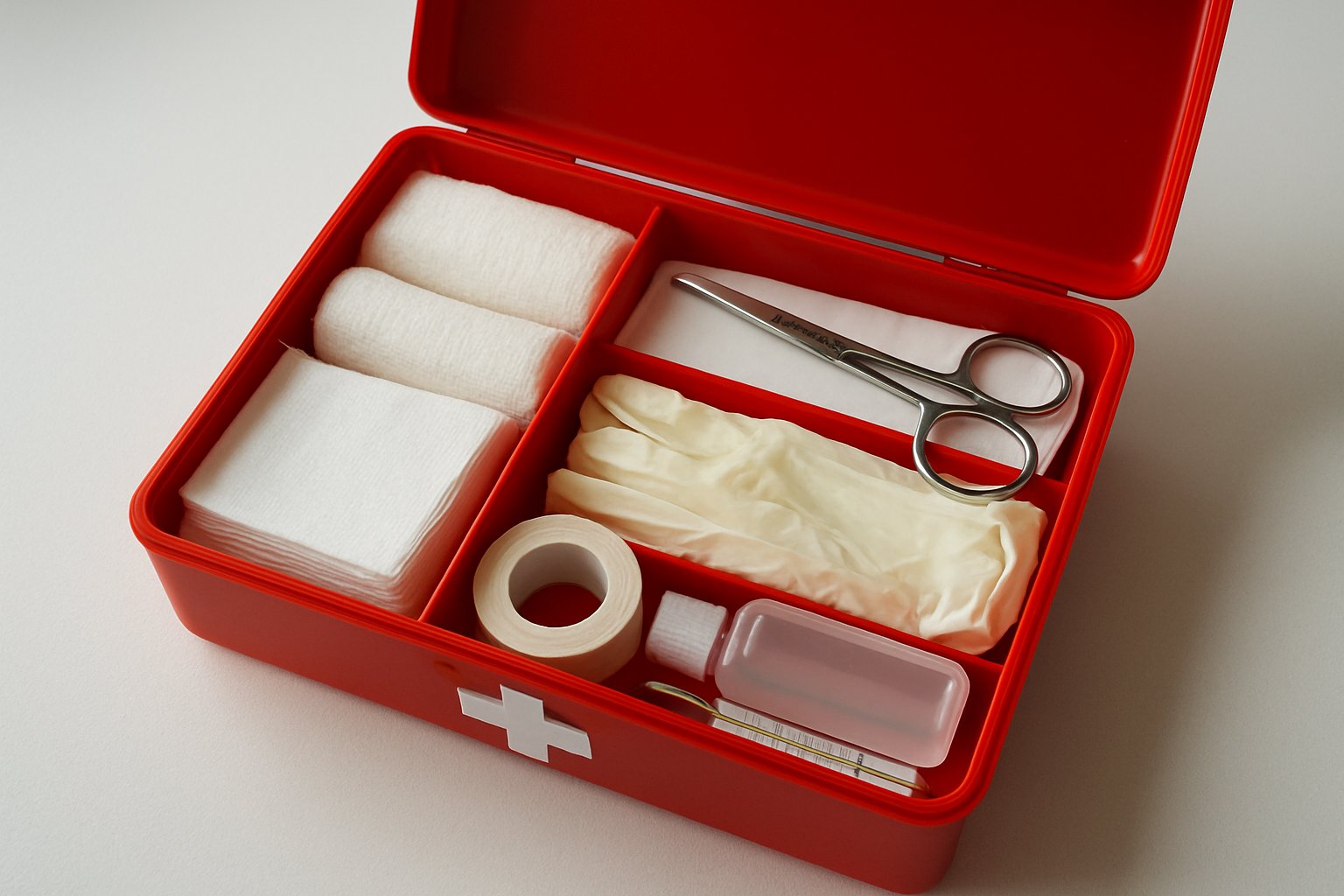
The contents of the first aid kit and the material list are in the guide "Home and Backpack First Aid Kit." And if you can, take an in-person first aid course (2-4 hours): practice is worth more than a thousand guides.